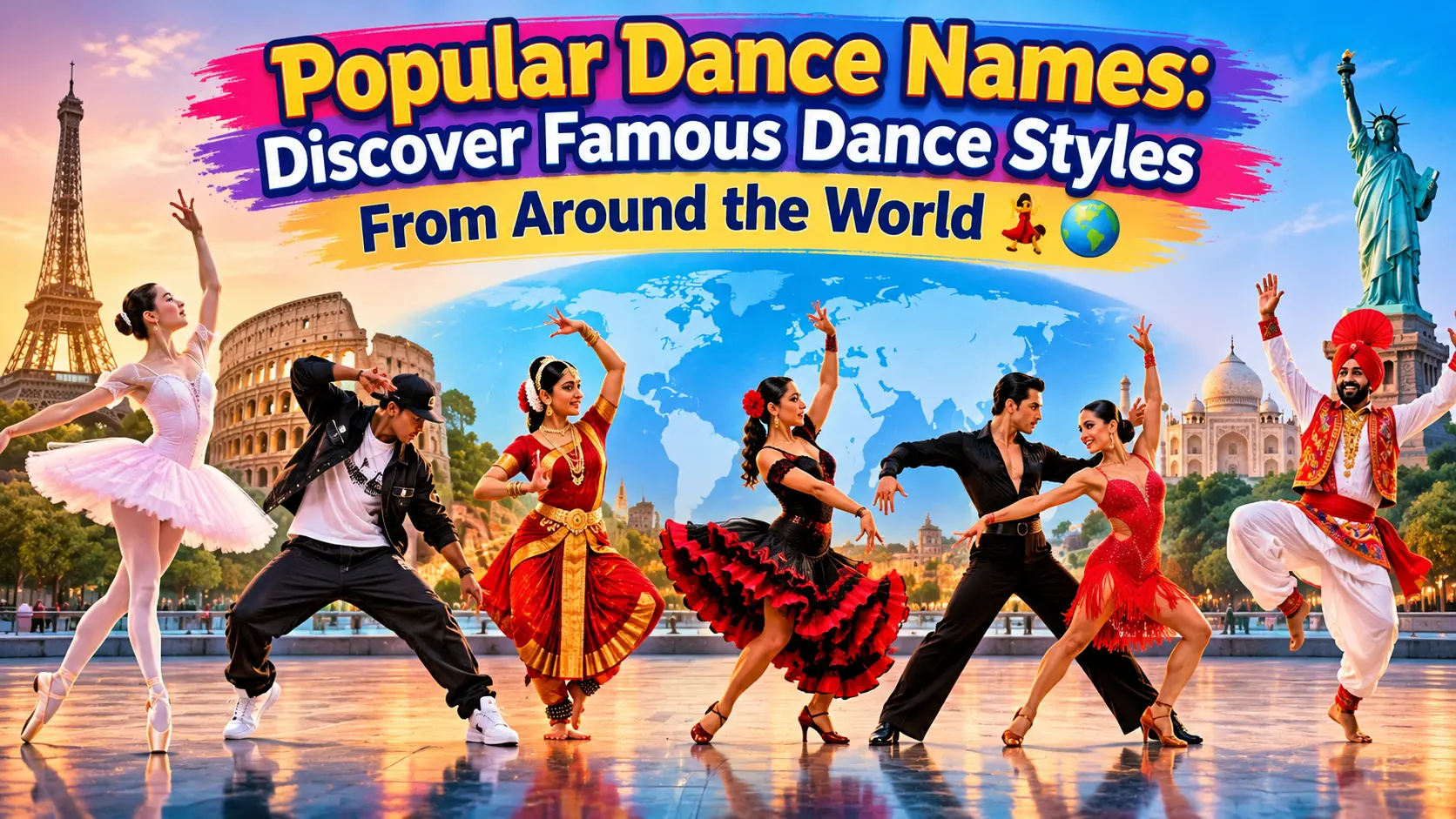
Dance is one of the most exciting ways to express creativity, celebrate culture, and connect with people. From energetic hip-hop moves to graceful ballet performances and lively Latin rhythms, every dance style has its own personality, history, and unique charm.
Whether you’re learning to dance, preparing for a school project, exploring cultural traditions, or simply curious about famous dance styles, discovering popular dance names can open the door to an incredible world of movement.
Some dances, such as salsa, tango, and waltz, have been popular for generations. Others, including hip-hop, breakdancing, and viral social media dances, continue to influence modern music and entertainment.
In this guide, you’ll discover popular dance names from around the world, including traditional dances, ballroom styles, street dances, Latin dances, Indian dance forms, African dances, and trending social media moves. You’ll also find dance styles for beginners, famous performance dances, and answers to common questions.
Let’s explore the wonderful world of dance and find the styles that inspire you most! 💃
💃 Popular Dance Names
If you want a quick list of well-known dance styles, these are some of the most recognizable options from different cultures and performance traditions.
- Ballet
- Ballroom
- Belly Dance
- Bollywood Dance
- Breakdancing
- Cha-Cha
- Contemporary Dance
- Country Line Dance
- Foxtrot
- Flamenco
- Hip-Hop
- Jazz Dance
- Jive
- K-Pop Dance
- Merengue
- Modern Dance
- Paso Doble
- Quickstep
- Salsa
- Samba
- Swing
- Tango
- Tap Dance
- Waltz
- Zumba
Each style has its own techniques, rhythms, and traditions. Some focus on storytelling and expression, while others emphasize partner coordination, athletic movement, or social dancing.
🌟 Different Types of Dance
Dance can be divided into several broad categories. Understanding these groups makes it easier to discover styles that match your interests.
Classical Dance
Classical dance traditions often involve formal techniques, structured movements, and years of training. Some are associated with theatrical performance, while others developed through long-standing cultural traditions.
Examples include:
- Ballet
- Bharatanatyam
- Kathak
- Kathakali
- Kuchipudi
- Manipuri
- Mohiniyattam
- Odissi
- Sattriya
- Classical Persian Dance
Contemporary and Modern Dance
Modern and contemporary dance often emphasize personal expression, experimentation, and fluid movement. Choreographers may combine different techniques to communicate emotions or tell stories.
Popular examples include:
- Contemporary Dance
- Modern Dance
- Lyrical Dance
- Interpretive Dance
- Improvisational Dance
- Contact Improvisation
- Release Technique
- Graham Technique
- Cunningham Technique
- Dance Theater
Social Dance
Social dances are commonly performed at parties, celebrations, clubs, weddings, and community events. Many are designed for partners or groups.
Examples include:
- Salsa
- Bachata
- Merengue
- Swing
- Hustle
- Foxtrot
- Waltz
- Cha-Cha
- Rumba
- Line Dancing
Street and Urban Dance Styles
Street dance includes styles that developed in social settings, clubs, communities, and street-dance cultures. Each style has distinct movement vocabulary and cultural roots.
Examples include:
- Breaking
- Popping
- Locking
- House Dance
- Krump
- Waacking
- Voguing
- Litefeet
- Turfing
- Hip-Hop Freestyle
Cultural and Folk Dance
Traditional and folk dances reflect the histories, celebrations, music, and identities of communities around the world.
Examples include:
- Flamenco
- Irish Step Dance
- Bhangra
- Garba
- Dandiya Raas
- Hula
- Clogging
- Dabke
- Tarantella
- Highland Dancing
🕺 Hip-Hop and Street Dance Names
Hip-hop and street dance styles have influenced music videos, competitions, films, and social media. These styles are known for individuality, rhythm, creativity, and energetic performances.
Hip-Hop Dance
Hip-hop dance is a broad category of dance associated with hip-hop culture. It can include freestyle movement, party dances, choreography, and other styles influenced by hip-hop music.
Breaking
Breaking, also commonly called breakdancing, developed within hip-hop culture in the Bronx, New York City. It features footwork, freezes, floor movements, and power moves.
Popping
Popping uses quick muscle contractions and releases to create sharp, rhythmic movements. Dancers often combine popping with isolations, waves, and other techniques.
Locking
Locking is characterized by distinctive pauses or “locks,” expressive gestures, and playful performance. It emerged from funk dance culture.
Krump
Krump is an expressive, high-energy dance style that uses strong movements, chest pops, stomps, and dramatic gestures.
House Dance
House dance developed alongside house music in club environments. It often features fast footwork, fluid movement, and improvisation.
Waacking
Waacking is known for expressive arm movements, posing, musicality, and performance. Its history is closely connected to Black and Latino LGBTQ+ club culture in Los Angeles.
Voguing
Voguing developed within Black and Latino LGBTQ+ ballroom communities. It includes stylized poses, runway-inspired walks, and highly expressive forms of movement.
Litefeet
Litefeet developed in New York City and is known for quick footwork, rhythmic tricks, and playful movement often performed to hip-hop music.
Turfing
Turfing developed in Oakland, California. It combines expressive storytelling, intricate footwork, and distinctive body movements.
💃 Popular Latin Dance Names
Latin dance styles are loved around the world for their lively rhythms, expressive movement, and strong musical traditions. Some are performed socially, while others feature highly technical competitive choreography.
Salsa
Salsa is a popular partner dance associated with Afro-Caribbean and Latin music traditions. It features rhythmic steps, turns, and coordinated partner movements.
Bachata
Bachata originated in the Dominican Republic. It is known for its rhythmic footwork, expressive partner connection, and romantic musical style.
Merengue
Merengue is a lively dance and music tradition from the Dominican Republic. Its basic steps are relatively accessible for beginners, making it popular at social gatherings.
Cha-Cha
Cha-cha, also called cha-cha-cha, is a Latin dance known for its distinctive rhythm and quick, playful steps.
Rumba
Rumba can refer to several related Cuban musical and dance traditions, while ballroom rumba is a separate standardized partner-dance style influenced by Cuban dance and music.
Samba
Samba is associated with Brazil and includes several distinct dance traditions. Ballroom samba is also a popular competitive dance style.
Argentine Tango
Argentine tango developed in the Río de la Plata region, particularly Buenos Aires and Montevideo. It is known for close partner connection, improvisation, and expressive musical interpretation.
Paso Doble
Paso doble is a dramatic ballroom dance inspired by Spanish bullfighting imagery and music. Its choreography emphasizes strong posture and theatrical movement.
Bolero
Bolero refers to several musical and dance traditions, including Cuban bolero and ballroom bolero. The styles differ in rhythm, movement, and historical development.
Mambo
Mambo developed from Cuban musical traditions and became popular internationally through dance halls, orchestras, and social dance culture.
🩰 Famous Ballroom Dance Names
Ballroom dancing is often associated with elegant partner movements, formal events, competitions, and choreographed performances. It is commonly divided into International Standard and International Latin categories, alongside other social ballroom traditions.
Waltz
The waltz is known for its flowing movements and rotating patterns. Its smooth style makes it a favorite for formal events and wedding dances.
Foxtrot
The foxtrot uses smooth walking steps, flowing movement, and a relaxed elegance. It is often danced to jazz or big-band music.
Quickstep
The quickstep is an energetic ballroom dance featuring quick footwork, runs, hops, and lively movement.
Tango
Ballroom tango features sharp, controlled movements and dramatic musical interpretation. It differs from Argentine tango in technique and performance style.
Viennese Waltz
The Viennese waltz is a fast, rotating partner dance with a long history in European ballroom culture.
Jive
Jive is a lively partner dance associated with swing and rock-and-roll music. It is known for quick steps, kicks, and energetic movement.
Competitive Ballroom Dance Categories
International Standard includes:
- Waltz
- Tango
- Viennese Waltz
- Slow Foxtrot
- Quickstep
International Latin includes:
- Cha-Cha
- Samba
- Rumba
- Paso Doble
- Jive
These are the five dances commonly featured in the respective International competitive categories.
🌸 Popular Indian Dance Names
India has an exceptionally rich dance heritage, ranging from classical traditions with detailed techniques to folk dances performed during weddings, harvests, and festivals.
Bharatanatyam
Bharatanatyam is a classical dance form from Tamil Nadu. It combines rhythmic footwork, expressive gestures, facial expressions, and storytelling.
Kathak
Kathak is a North Indian classical dance tradition known for intricate footwork, rhythmic patterns, spins, and expressive storytelling.
Kathakali
Kathakali is a classical dance-drama tradition from Kerala. It features elaborate costumes, detailed makeup, stylized gestures, and dramatic storytelling.
Kuchipudi
Kuchipudi is a classical dance form associated with Andhra Pradesh. It combines rhythmic movement, expressive acting, and elements of dance-drama.
Odissi
Odissi originated in Odisha and is recognized for its sculptural poses, fluid torso movements, and expressive performance.
Manipuri
Manipuri dance developed in Manipur and is associated with devotional traditions, graceful movement, and distinctive costumes.
Mohiniyattam
Mohiniyattam is a classical dance form from Kerala known for flowing movements and graceful expressions.
Sattriya
Sattriya is a classical dance tradition from Assam with roots in devotional performance.
Bhangra
Bhangra originated in Punjab and is known for energetic steps, rhythmic shoulder movements, and lively music. It is popular at celebrations, festivals, and weddings.
Garba
Garba is a Gujarati folk dance traditionally performed in circles, especially during Navratri celebrations.
Dandiya Raas
Dandiya Raas is a Gujarati folk dance that commonly uses decorated sticks and coordinated partner or group movements.
Bollywood Dance
Bollywood dance is a broad performance style associated with Indian cinema. It often blends classical, folk, contemporary, and Western dance influences.
Ghoomar
Ghoomar is a traditional folk dance from Rajasthan, recognized for its graceful turns and flowing skirts.
Lavani
Lavani is a traditional dance and music form associated with Maharashtra. It combines rhythmic movement, expressive performance, and lively music.
Chhau
Chhau is a group of traditional dance forms associated with eastern India. Some traditions incorporate masks, martial movements, and dramatic storytelling.
🌍 Traditional Dance Names From Around the World
Traditional dances provide a window into a region’s history, identity, music, and celebrations. Here are famous examples from different countries and cultural traditions.
| Dance name | Associated region or culture |
|---|---|
| Flamenco | Andalusia, Spain |
| Irish Step Dance | Ireland |
| Highland Dancing | Scotland |
| Hula | Hawaiʻi |
| Dabke | Levant |
| Tarantella | Southern Italy and other Italian traditions |
| Clogging | Appalachian and other American traditions |
| Cossack Dance | Various Eastern European traditions |
| Haka | Māori culture, Aotearoa New Zealand |
| Sirtaki | Greece |
| Fandango | Spain and related traditions in the Americas |
| Polka | Central European dance traditions |
| Mazurka | Poland |
| Czardas | Hungary |
| Kalinka-inspired folk dancing | Russian cultural repertoire |
| Horon | Black Sea region of Türkiye |
| Tinikling | Philippines |
| Joget | Malaysia and related regional traditions |
| Lion Dance | Chinese cultural traditions |
| Bon Odori | Japan |
| Odissi | Odisha, India |
| Bhangra | Punjab |
| Samba | Brazil |
| Capoeira | Afro-Brazilian tradition |
| Kpanlogo | Ghana |
| Adumu | Maasai communities of East Africa |
These dances vary widely in purpose and technique. Some are performed for entertainment, others for ceremonies, religious occasions, social celebrations, or cultural preservation.
🌍 African Dance Names
African dance traditions are incredibly diverse, representing many countries, ethnic communities, and musical cultures. These dances should not be treated as one single style because each has its own history and context.
- Adumu
- Agbekor
- Atilogwu
- Azonto
- Gwara Gwara
- Kpanlogo
- Makossa
- Mapouka
- Pantsula
- Sabar
- Shaku Shaku
- Umteyo
- Eskista
- Indlamu
- Isicathamiya
- Moribayasa
- Zaouli
- Gahu
- Kuduro
- Kizomba
Some entries are broader performance or dance-music styles rather than one standardized traditional dance. For example, Kizomba is a partner-dance and music tradition associated with Angola, while Azonto is a popular dance style from Ghana.
🎶 Swing and Jazz Dance Names
Swing and jazz dance styles developed alongside changing musical traditions, particularly in the United States. They are known for rhythmic footwork, improvisation, and energetic social dancing.
- Lindy Hop
- Charleston
- Balboa
- Collegiate Shag
- East Coast Swing
- West Coast Swing
- Jitterbug
- Boogie-Woogie
- Solo Jazz
- Blues Dance
- Authentic Jazz
- Vernacular Jazz
- St. Louis Shag
- Carolina Shag
- Rock and Roll Dance
Lindy Hop
Lindy Hop developed in Harlem, New York City, during the swing era. It combines partner dancing, improvisation, rhythmic footwork, and playful movement.
Charleston
The Charleston became widely popular during the 1920s. Its characteristic steps and energetic rhythm made it an iconic dance of the Jazz Age.
Balboa
Balboa developed in Southern California and is known for close partner connection and compact footwork, particularly in crowded dance spaces.
West Coast Swing
West Coast Swing is a partner dance characterized by a slotted floor pattern, improvisation, and movement that adapts to many music genres.
🎤 Popular K-Pop and Viral Dance Names
K-pop choreography and social media trends have introduced many dance challenges to global audiences. Some trends become recognizable through a specific song, artist, or short sequence of movements.
Examples include:
- Gangnam Style Dance
- Renegade Dance
- Wednesday Dance
- Cupid Dance Challenge
- Severe Love Dance
- Macarena
- Harlem Shake
- Floss Dance
- Dab
- Orange Justice
- Milly Rock
- Shoot Dance
- Woah
- Dougie
- Griddy
- Chicken Noodle Soup Challenge
- Any Song Challenge
- Hype Boy Challenge
- Super Shy Challenge
- Magnetic Challenge
The popularity of individual trends changes quickly, especially on short-form video platforms. Some moves originate in Black dance communities or other cultural contexts, so crediting the original creators and communities is important when sharing or teaching them.
🪩 Disco and Party Dance Names
Disco and party dances are popular at celebrations, school events, weddings, and social gatherings. Many are simple enough for groups to learn together.
- Hustle
- Macarena
- Electric Slide
- Cha-Cha Slide
- Cupid Shuffle
- YMCA Dance
- Chicken Dance
- Hokey Pokey
- Twist
- Mashed Potato
- Funky Chicken
- Running Man
- Robot
- Moonwalk
- Sprinkler
- Cabbage Patch
- Charleston
- Disco Point
- Soul Train Line
- Limbo
Some of these are specific named dances, while others are recognizable party moves that can be incorporated into a routine.
👯 Group Dance Names
Group dances are perfect for school performances, dance teams, competitions, weddings, and celebrations. Some follow established choreographies, while others are designed for coordinated group performance.
- Line Dance
- Circle Dance
- Square Dance
- Contra Dance
- Folk Dance
- Flash Mob Dance
- Cheer Dance
- Drill Dance
- Formation Dance
- Team Hip-Hop
- Group Contemporary
- Bollywood Group Dance
- Bhangra Team Dance
- Synchronized Dance
- Musical Theater Ensemble Dance
Line Dance
Line dancing involves dancers standing in lines or rows and repeating a sequence of steps. It is common in country dance settings and social events.
Square Dance
Square dancing involves groups of four couples arranged in a square, usually following calls from a caller.
Circle Dance
Circle dancing brings participants into a circle and is found in many cultural traditions around the world.
Flash Mob Dance
A flash mob is a coordinated performance in a public place, often designed to surprise onlookers. It is a performance format rather than one specific dance style.
💍 Popular Wedding Dance Names
Wedding dances can be romantic, traditional, funny, or energetic. The right style depends on the couple’s preferences, musical taste, and comfort level.
- Waltz
- Foxtrot
- Rumba
- Salsa
- Bachata
- Swing
- Cha-Cha
- Tango
- Bollywood Dance
- Bhangra
- Garba
- Dabke
- Line Dance
- Slow Dance
- First Dance Choreography
A slow waltz or rumba may suit a romantic first dance, while salsa or swing can add excitement. Cultural traditions such as Bhangra, Garba, and Dabke are often wonderful choices for group celebrations.
🩰 Dance Styles for Beginners
If you’re new to dancing, you don’t need to master complicated choreography immediately. Start with a style that fits your interests and physical comfort.
Easy Social Dances
- Merengue
- Basic Salsa
- Bachata Basics
- Waltz Basics
- Line Dancing
- Simple Swing
- Cha-Cha Basics
These styles can be learned gradually with practice and, when appropriate, guidance from an instructor.
Beginner-Friendly Fitness Dances
- Zumba
- Dance Aerobics
- Cardio Dance
- Jazzercise
- Bollywood Fitness
- Hip-Hop Fitness
- Beginner Contemporary
Fitness-focused classes often combine simple choreography with aerobic movement. Choose a class that matches your experience level and physical abilities.
Beginner Tips
- Start with short routines and simple steps.
- Practice with music that you enjoy.
- Learn the rhythm before adding complicated movements.
- Wear comfortable clothing and suitable footwear.
- Warm up before energetic practice.
- Take breaks when needed.
- Consider beginner classes if you want structured guidance.
Consistency is more useful than trying to learn every move at once. Even a few minutes of practice can help you become more comfortable with rhythm and coordination.
💃 How to Choose the Right Dance Style
With so many dance names to explore, the best choice depends on what you want from the experience.
If You Love Energetic Movement
Try hip-hop, breaking, Bhangra, salsa, or jazz dance. These styles offer opportunities for powerful movements, rhythmic footwork, and dynamic performances.
If You Prefer Graceful Movement
Ballet, contemporary dance, waltz, and Odissi may appeal to you. These styles emphasize control, posture, fluidity, or expressive movement in different ways.
If You Enjoy Dancing With a Partner
Consider salsa, bachata, tango, swing, foxtrot, or waltz. Each offers a different combination of rhythm, coordination, and partner connection.
If You Love Cultural Traditions
Explore Bharatanatyam, Kathak, Flamenco, Hula, Dabke, Irish Step Dance, or Garba. Learning about the history and cultural context can make the experience more meaningful.
If You Want a Fun Workout
Zumba, cardio dance, Bollywood fitness, and dance aerobics combine movement with music and can make exercise more enjoyable.
If You Like Learning Trends
K-pop choreography and viral dance challenges can be fun options. Look for tutorials that credit the choreographers and original creators when possible.
❓ Frequently Asked Questions About Popular Dance Names
What are the most popular dance styles?
Some widely recognized dance styles include hip-hop, ballet, salsa, tango, contemporary dance, jazz, ballroom, breakdancing, Bollywood dance, and tap dance. Popularity varies by country, age group, music culture, and setting.
What are the five main types of dance?
There is no single universal classification, but five broad categories are classical dance, contemporary and modern dance, social dance, street dance, and folk or cultural dance. Each category includes many different styles.
What are the most famous Latin dances?
Salsa, bachata, merengue, cha-cha, samba, mambo, rumba, and Argentine tango are among the best-known Latin and Latin-associated dance styles. Their histories and cultural origins differ, so they should not all be treated as interchangeable.
What are popular Indian dance names?
Popular Indian dance forms include Bharatanatyam, Kathak, Kathakali, Kuchipudi, Odissi, Manipuri, Mohiniyattam, Sattriya, Bhangra, Garba, Dandiya Raas, and Bollywood dance.
What is the easiest dance to learn?
Many beginners find basic merengue, simple line dances, and beginner-friendly social dance routines approachable. The easiest style depends on your coordination, musical experience, physical comfort, and the instructor’s teaching approach.
What is the difference between modern and contemporary dance?
Modern dance refers to dance traditions that developed partly in reaction to classical ballet conventions, particularly during the late nineteenth and twentieth centuries. Contemporary dance is a broader, evolving field that often draws from modern dance, ballet, improvisation, and other movement practices.
What are popular street dance styles?
Breaking, popping, locking, house dance, krump, waacking, voguing, litefeet, and turfing are well-known street or club dance styles. Each has its own history, technique, and cultural context.
What are famous traditional dances from around the world?
Examples include Flamenco from Spain, Hula from Hawaiʻi, Irish Step Dance from Ireland, Dabke from the Levant, Garba from Gujarat, Bhangra from Punjab, and Tinikling from the Philippines.
What is the difference between breaking and hip-hop dance?
Breaking is a distinct dance style that developed within hip-hop culture and includes specific techniques such as footwork, freezes, and power moves. Hip-hop dance is a broader category that includes various social and performance styles associated with hip-hop culture.
What are some popular party dances?
Popular party dances include the Macarena, Electric Slide, Cha-Cha Slide, Cupid Shuffle, Chicken Dance, Twist, and YMCA dance. These are frequently used at celebrations because they encourage group participation.
💖 Final Thoughts on Popular Dance Names
Dance offers countless ways to express yourself, connect with others, and explore different cultures. From the elegance of ballet and waltz to the energy of hip-hop and breaking, every dance style brings something unique to the floor.
If you love partner dancing, explore salsa, tango, or bachata. If you’re drawn to traditional performances, discover Bharatanatyam, Flamenco, Hula, or Bhangra. For a modern experience, try contemporary dance, K-pop choreography, or a beginner-friendly fitness class.
Remember that dance is not just about mastering steps. It is also about enjoying music, developing confidence, and appreciating the traditions and communities behind different styles.
Start with a dance that excites you, practice at your own pace, and let the rhythm guide you. You may discover a new favorite style along the way!
Victoria Blake is a passionate writer and naming enthusiast who enjoys exploring name meanings, origins, and trends. Through Namezpedia, she helps readers discover unique and meaningful names from around the world.