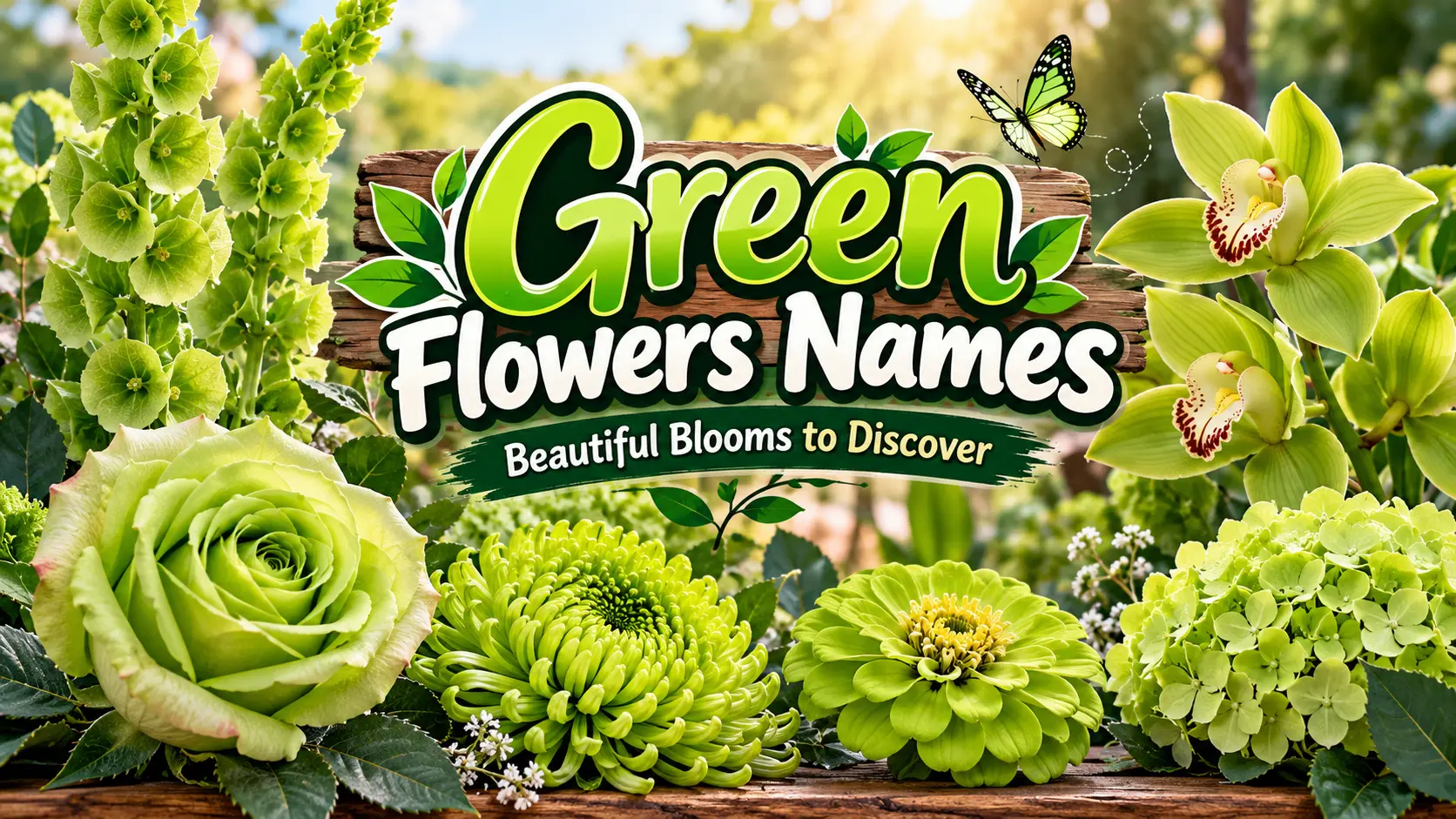
Green flowers names are perfect for gardeners, flower lovers, wedding planners, and anyone searching for unusual floral varieties. These beautiful blooms bring a fresh, natural appearance to gardens, bouquets, flower beds, and home decorations. From pale lime-green petals to deep emerald shades, green flowers offer something different from traditional red, pink, and yellow blossoms.
Some green flowers are naturally green, while others come from specially selected cultivars. Popular examples include Bells of Ireland, green roses, green chrysanthemums, green zinnias, and Green Trick Dianthus. You can find varieties with delicate petals, rounded flower heads, tall spikes, and unusual textures. Each type has its own growing requirements and decorative appeal.
Choosing the right green flower depends on your purpose. You might want an elegant flower for a wedding bouquet, a colorful addition to a summer garden, or a rare bloom for a botanical collection. You may also be searching for green flowers that grow well in containers or thrive in shaded areas. Understanding their colors, characteristics, and growing needs makes the selection process easier.
This guide explores green flower names across different categories, including popular varieties, rare blooms, garden favorites, tropical flowers, and flowers for special occasions. You’ll also discover their characteristics, common uses, and practical growing tips. Use these lists to find beautiful green flowers for your garden, floral arrangements, or next gardening project.
🌱 Popular Green Flowers Names for Every Garden
Popular green flowers combine attractive colors with versatile growing habits. Some are easy to grow in ordinary garden beds, while others are better suited to florists, greenhouses, or containers. These familiar varieties are excellent starting points when exploring flowers with green petals or green floral structures.
- Green Rose
- Bells of Ireland
- Green Chrysanthemum
- Green Zinnia
- Green Carnation
- Green Gladiolus
- Green Hellebore
- Green Tulip
- Green Hydrangea
- Green Calla Lily
- Green Cymbidium Orchid
- Green Anthurium
- Green Lisianthus
- Green Dahlia
- Green Aster
- Green Coneflower
- Green Amaranthus
- Green Dianthus
- Green Snapdragon
- Green Ranunculus
- Green Parrot Tulip
- Green Spider Mum
- Green Button Mum
- Green Snowball Viburnum
- Green Lady’s Slipper Orchid
- Green Columbine
- Green Euphorbia
- Green Scabiosa
- Green Fritillaria
- Green Bells of Ireland
- Green Foxglove
- Green Phalaenopsis Orchid
- Green Oncidium Orchid
- Green Globe Thistle
- Green Lenten Rose
- Green Flowering Tobacco
- Green Sweet William
- Green Nicotiana
- Green Yarrow
- Green Pincushion Flower
Green roses and chrysanthemums are especially useful in floral arrangements. Bells of Ireland add height, while green zinnias bring a cheerful appearance to summer gardens. Remember that some names describe specific cultivars, whereas others refer to a broad group of green-flowered varieties.
💚 Unique Green Flowers Names for Something Different
Unique green flowers stand out because of their unusual shapes, subtle colors, or distinctive textures. They are particularly attractive to collectors and gardeners who want something beyond ordinary flower varieties. Some have tiny clustered blooms, while others feature dramatic petals or sculptural floral structures.
- Green Trick Dianthus
- Green Ball Dianthus
- Green Envy Zinnia
- Green Wizard Coneflower
- Green Jewel Coneflower
- Green Dragon Hellebore
- Green Star Gladiolus
- Green Mist Ammi
- Green Lace Flower
- Green Spider Chrysanthemum
- Green Frog Hellebore
- Green Emperor Tulip
- Green Goddess Calla Lily
- Green Sensation Hydrangea
- Green Mountain Boxwood Flowering Display
- Green Velvet Alocasia Inflorescence
- Green Jack-in-the-Pulpit
- Green Lady’s Mantle Flowers
- Green Sweet Pepperbush Blooms
- Green Flowering Spurge
- Green Poppy Mallow
- Green Broomrape Flowers
- Green Solomon’s Seal
- Green Hosta Flowers
- Green Hops Flowers
- Green Wild Ginger Flowers
- Green Birthwort Flowers
- Green Manzanita Flowers
- Green Helleborus Foetidus
- Green Fennel Flowers
- Green Angelica Flowers
- Green Lovage Flowers
- Green Dill Flowers
- Green Coriander Flowers
- Green Caraway Flowers
- Green Celery Flowers
- Green Parsley Flowers
- Green Mustard Flowers
- Green Buckwheat Flowers
- Green Amaranth Flowers
Some entries in this list describe plants with greenish flowers rather than large, decorative green petals. For example, many herbs produce small greenish or yellow-green flower clusters. Always check the botanical identity before purchasing a plant, especially when a common name can refer to several different species.
🌷 Rare Green Flowers for Collectors and Flower Lovers
Rare green flowers often attract attention because they are less familiar in everyday bouquets. Their unusual appearance can make a garden feel more distinctive, particularly when their shades contrast with white or dark-colored flowers. Availability varies by region, and some species require specialist care.
- Green Lady’s Slipper Orchid
- Green Cymbidium Orchid
- Green Paphiopedilum Orchid
- Green Dendrobium Orchid
- Green Jewel Orchid
- Green Habenaria Orchid
- Green Fritillaria
- Green Helleborus Foetidus
- Green Jack-in-the-Pulpit
- Green Trillium
- Green Wild Ginger
- Green Aristolochia
- Green Birthwort
- Green Euphorbia
- Green Poppy
- Green Broomrape
- Green Orchid Cactus Flowers
- Green Magnolia Cultivars
- Green Flowering Dogwood Forms
- Green Japanese Anemone Forms
- Green Clematis Cultivars
- Green Parrot Tulip
- Green Viridiflora Tulip
- Green-Flowered Hellebore
- Green-Flowered Lenten Rose
- Green-Flowered Columbine
- Green-Flowered Aquilegia
- Green-Flowered Foxglove
- Green-Flowered Snapdragon
- Green-Flowered Dahlia
- Green-Flowered Gladiolus
- Green-Flowered Ranunculus
- Green-Flowered Lisianthus
- Green-Flowered Scabiosa
- Green-Flowered Delphinium
- Green-Flowered Sweet William
- Green-Flowered Carnation
- Green-Flowered Phlox
- Green-Flowered Primrose
- Green-Flowered Hosta
Not every plant in this list is equally rare, and some descriptions refer to green-flowered cultivars within a larger plant group. Orchid species may have strict temperature, humidity, and light requirements. If you want a genuinely unusual specimen, verify its scientific name and check whether it is legally and sustainably sourced.
🌼 Green Flowers Names for Wedding Bouquets
Green flowers are popular in wedding designs because they create a natural, sophisticated look. They pair well with white roses, cream-colored blooms, soft yellow flowers, and fresh foliage. The right combination can make a bouquet look elegant without relying on bright colors.
- Green Rose
- Green Carnation
- Green Chrysanthemum
- Bells of Ireland
- Green Lisianthus
- Green Cymbidium Orchid
- Green Calla Lily
- Green Hydrangea
- Green Ranunculus
- Green Zinnia
- Green Gladiolus
- Green Anthurium
- Green Tulip
- Green Hellebore
- Green Dahlia
- Green Spider Mum
- Green Button Mum
- Green Trick Dianthus
- Green Ball Dianthus
- Green Amaranthus
- Green Snowball Viburnum
- Green Scabiosa
- Green Fritillaria
- Green Delphinium
- Green Sweet William
- Green Phalaenopsis Orchid
- Green Oncidium Orchid
- Green Parrot Tulip
- Green Snapdragon
- Green Aster
- Green Globe Thistle
- Green Euphorbia
- Green Flowering Tobacco
- Green Lady’s Mantle
- Green Hosta Flowers
- Green Foxglove
- Green Coneflower
- Green Columbine
- Green Helleborus Foetidus
- Green Queen Anne’s Lace Forms
For a classic bridal bouquet, combine green roses with white roses and subtle foliage. Bells of Ireland can create height and movement, while green chrysanthemums provide fullness. Green orchids and calla lilies offer a more modern look, especially when paired with minimalist decorations.
Availability can change with the season. Ask a florist which green varieties are in stock before building an entire wedding color scheme around one flower.
🪴 Green Flowers Names for Home Gardens
Green flowers can create a calming garden palette when combined with leafy plants and neutral-colored blooms. Some varieties prefer sunny borders, while others thrive in partial shade. Selecting plants suited to your climate is more important than choosing a flower based on color alone.
- Green Zinnia
- Green Chrysanthemum
- Bells of Ireland
- Green Carnation
- Green Gladiolus
- Green Hellebore
- Green Coneflower
- Green Tulip
- Green Hydrangea
- Green Dahlia
- Green Aster
- Green Snapdragon
- Green Dianthus
- Green Columbine
- Green Foxglove
- Green Hosta Flowers
- Green Lady’s Mantle Flowers
- Green Euphorbia
- Green Fennel Flowers
- Green Dill Flowers
- Green Coriander Flowers
- Green Parsley Flowers
- Green Angelica Flowers
- Green Lovage Flowers
- Green Yarrow
- Green Scabiosa
- Green Sweet William
- Green Amaranthus
- Green Ranunculus
- Green Lisianthus
- Green Calla Lily
- Green Anthurium
- Green Cymbidium Orchid
- Green Phalaenopsis Orchid
- Green Fritillaria
- Green Helleborus Foetidus
- Green Snowball Viburnum
- Green Flowering Spurge
- Green Mustard Flowers
- Green Buckwheat Flowers
Annual flowers such as suitable green zinnias can provide seasonal color, while hellebores and certain shrubs offer longer-term garden interest. Herbs also produce delicate flowers, although their blooms may appear yellow-green rather than completely green. Before planting, consider mature height, spacing, drainage, and the amount of sunlight available.
🌿 Green Flowers Names for Shady Areas
Shaded gardens can still feature interesting flowers, especially when you choose plants adapted to woodland conditions. Many shade-loving varieties produce greenish flowers or subtle blooms that look beautiful against dark foliage. The amount of shade and local climate will determine which plants perform best.
- Green Hellebore
- Green Hosta Flowers
- Green Solomon’s Seal
- Green Wild Ginger
- Green Jack-in-the-Pulpit
- Green Trillium
- Green Lady’s Mantle Flowers
- Green Columbine
- Green Foxglove
- Green Snowdrop
- Green Fritillaria
- Green Cymbidium Orchid
- Green Paphiopedilum Orchid
- Green Jewel Orchid
- Green Hosta Cultivars
- Green Flowering Spurge
- Green Helleborus Foetidus
- Green Birthwort Flowers
- Green Aristolochia Flowers
- Green Lady’s Slipper Orchid
- Green Primrose Forms
- Green Anemone Forms
- Green Solomon’s Seal Flowers
- Green Wild Ginger Blooms
- Green Woodland Orchid
- Green Aquilegia Forms
- Green Lenten Rose
- Green Japanese Forest Orchid
- Green Shade-Garden Hellebore
- Green Woodland Trillium
- Green Flowering Hosta
- Green Epimedium Flowers
- Green Arisaema Flowers
- Green Polygonatum Flowers
- Green Asarum Flowers
- Green Woodland Euphorbia
- Green Toad Lily Forms
- Green Virginia Bluebell Forms
- Green Foamflower Forms
- Green Woodland Columbine
Some of these plants are better described as greenish-flowered woodland plants than as purely green flowers. Many also need moist, well-drained soil or protection from intense afternoon sunlight. Check local growing guidance before planting orchids or woodland species, as some are sensitive to disturbance.
🌞 Green Flowers Names for Sunny Gardens
Sunny gardens offer excellent growing conditions for many annual flowers and flowering perennials. Green blooms can look particularly striking when sunlight highlights their lime, chartreuse, or yellow-green tones. Choose varieties that tolerate your area’s summer temperatures and soil conditions.
- Green Zinnia
- Green Chrysanthemum
- Bells of Ireland
- Green Gladiolus
- Green Dahlia
- Green Carnation
- Green Coneflower
- Green Yarrow
- Green Amaranthus
- Green Snapdragon
- Green Dianthus
- Green Scabiosa
- Green Tulip
- Green Ranunculus
- Green Lisianthus
- Green Sweet William
- Green Aster
- Green Euphorbia
- Green Fennel Flowers
- Green Dill Flowers
- Green Coriander Flowers
- Green Parsley Flowers
- Green Mustard Flowers
- Green Buckwheat Flowers
- Green Celery Flowers
- Green Caraway Flowers
- Green Angelica Flowers
- Green Lovage Flowers
- Green Globe Thistle
- Green Flowering Tobacco
- Green Hellebore
- Green Zinnia Cultivars
- Green Button Chrysanthemum
- Green Spider Mum
- Green Trick Dianthus
- Green Ball Dianthus
- Green Envy Zinnia
- Green Parrot Tulip
- Green Flowering Spurge
- Green Snowball Viburnum
For sunny borders, consider green zinnias, gladiolus, and suitable chrysanthemum cultivars. Tall flowers can provide structure at the back of a bed, while compact varieties work well near pathways. Remember that tulips and ranunculus usually prefer cooler growing conditions, so their planting seasons differ from summer annuals.
🌺 Green Tropical Flowers Names
Tropical flowers can bring dramatic shapes and unusual colors to indoor collections, warm-climate gardens, and protected growing spaces. Several tropical plants produce green or greenish flowers, although some need controlled humidity and temperatures to thrive.
- Green Anthurium
- Green Cymbidium Orchid
- Green Phalaenopsis Orchid
- Green Dendrobium Orchid
- Green Oncidium Orchid
- Green Paphiopedilum Orchid
- Green Jewel Orchid
- Green Lady’s Slipper Orchid
- Green Calla Lily
- Green Bird-of-Paradise Forms
- Green Ginger Flowers
- Green Torch Ginger Forms
- Green Heliconia Forms
- Green Hoya Flowers
- Green Dischidia Flowers
- Green Aristolochia Flowers
- Green Birthwort Flowers
- Green Euphorbia
- Green Orchid Cactus Flowers
- Green Tropical Begonia Forms
- Green Moth Orchid
- Green Dancing Lady Orchid
- Green Boat Orchid
- Green Spider Orchid
- Green Reed Orchid
- Green Vanilla Orchid Flowers
- Green Cattleya Orchid Forms
- Green Vanda Orchid Forms
- Green Bulbophyllum Orchid Forms
- Green Aerangis Orchid Forms
- Green Tropical Hellebore-Like Forms
- Green Flowering Alocasia
- Green Flowering Monstera
- Green Flowering Philodendron
- Green Flowering Peace Lily
- Green Flowering ZZ Plant
- Green Flowering Aglaonema
- Green Flowering Dracaena
- Green Flowering Dieffenbachia
- Green Flowering Schefflera
Some plants listed here produce inconspicuous greenish inflorescences rather than showy green petals. Indoor foliage plants such as monstera and peace lilies are generally grown for their foliage or contrasting flower structures, not for green blooms. Orchids also vary greatly in their care requirements, so identify the exact species or hybrid before choosing a growing location.
🌸 Green Flowers Names With Scientific Names
Scientific names help distinguish genuine plant species from common names and commercial cultivar labels. This is especially useful when ordering seeds, buying rare flowers, or comparing varieties from different nurseries.
| Common name | Scientific name or botanical group |
|---|---|
| Bells of Ireland | Moluccella laevis |
| Green Trick Dianthus | Dianthus barbatus cultivar |
| Green Rose | Rosa cultivars |
| Green Zinnia | Zinnia elegans cultivars |
| Green Chrysanthemum | Chrysanthemum cultivars |
| Green Hellebore | Helleborus species and cultivars |
| Green Helleborus Foetidus | Helleborus foetidus |
| Green Gladiolus | Gladiolus cultivars |
| Green Carnation | Dianthus caryophyllus cultivars |
| Green Tulip | Tulipa cultivars |
| Green Calla Lily | Zantedeschia cultivars |
| Green Cymbidium Orchid | Cymbidium hybrids and species |
| Green Phalaenopsis Orchid | Phalaenopsis hybrids |
| Green Anthurium | Anthurium hybrids and species |
| Green Hydrangea | Hydrangea cultivars |
| Green Coneflower | Rudbeckia and Echinacea forms |
| Green Ranunculus | Ranunculus asiaticus cultivars |
| Green Lisianthus | Eustoma grandiflorum cultivars |
| Green Dahlia | Dahlia cultivars |
| Green Amaranthus | Amaranthus species and cultivars |
Common names are not always standardized. A nursery might use “green rose” for one cultivar, while another seller uses it for a different variety. Scientific names and cultivar labels provide a more reliable way to identify the plant you want.
💐 Green Flowers Names for Floral Arrangements
Green flowers can make floral arrangements look fresh, balanced, and modern. They work as focal blooms, supporting flowers, or textured accents, depending on their shape and size. Florists often combine different green tones to create depth without introducing too many competing colors.
- Green Rose
- Green Chrysanthemum
- Green Carnation
- Bells of Ireland
- Green Hydrangea
- Green Calla Lily
- Green Anthurium
- Green Cymbidium Orchid
- Green Lisianthus
- Green Ranunculus
- Green Dahlia
- Green Zinnia
- Green Gladiolus
- Green Spider Mum
- Green Button Mum
- Green Trick Dianthus
- Green Ball Dianthus
- Green Amaranthus
- Green Scabiosa
- Green Fritillaria
- Green Tulip
- Green Parrot Tulip
- Green Snapdragon
- Green Aster
- Green Delphinium
- Green Sweet William
- Green Hellebore
- Green Euphorbia
- Green Snowball Viburnum
- Green Globe Thistle
- Green Lady’s Mantle
- Green Foxglove
- Green Columbine
- Green Orchid
- Green Flowering Tobacco
- Green Pincushion Flower
- Green Coneflower
- Green Star Gladiolus
- Green Emperor Tulip
- Green Goddess Calla Lily
For a balanced arrangement, combine rounded blooms with flowers that have vertical or branching structures. Green hydrangeas add volume, Bells of Ireland add height, and green chrysanthemums provide a strong focal point. Green roses can soften the design, especially when paired with white flowers and eucalyptus leaves.
🍃 Light Green Flowers Names for a Fresh Look
Light green flowers often appear in lime, pale apple, or soft chartreuse shades. Their delicate coloring makes them useful for spring bouquets, contemporary gardens, and floral designs that favor subtle colors over bold contrasts.
- Green Envy Zinnia
- Green Trick Dianthus
- Green Ball Dianthus
- Green Rose
- Green Chrysanthemum
- Green Carnation
- Green Hydrangea
- Green Ranunculus
- Green Lisianthus
- Green Tulip
- Green Parrot Tulip
- Green Gladiolus
- Green Calla Lily
- Green Cymbidium Orchid
- Green Phalaenopsis Orchid
- Green Anthurium
- Green Coneflower
- Green Dahlia
- Green Scabiosa
- Green Snapdragon
- Green Aster
- Green Sweet William
- Green Hellebore
- Green Amaranthus
- Green Snowball Viburnum
- Green Fritillaria
- Green Delphinium
- Green Zinnia Cultivar
- Green Spider Mum
- Green Button Chrysanthemum
- Green Pincushion Flower
- Green Lady’s Mantle Flowers
- Green Flowering Euphorbia
- Green Flowering Spurge
- Green Bells of Ireland
- Green Flowering Tobacco
- Green Globe Thistle
- Green Hosta Flowers
- Green Columbine
- Green Flowering Foxglove
Light green varieties are particularly attractive alongside cream, ivory, pale yellow, and white blooms. Their subtle shades can make a bouquet feel airy and natural. However, color can vary according to the cultivar, growing conditions, and stage of flowering.
🌲 Dark Green and Deep Green Flower Varieties
Deep green flowers are less common than pale lime varieties, but certain cultivars have rich, muted, or green-brown tones. These flowers can create contrast in dramatic arrangements and pair well with white, burgundy, and other deep-colored blooms.
- Green Hellebore
- Green Helleborus Foetidus
- Green Anthurium
- Green Cymbidium Orchid
- Green Paphiopedilum Orchid
- Green Lady’s Slipper Orchid
- Green Rose
- Green Carnation
- Green Chrysanthemum
- Green Dahlia
- Green Gladiolus
- Green Calla Lily
- Green Tulip
- Green Parrot Tulip
- Green Hydrangea
- Green Ranunculus
- Green Lisianthus
- Green Fritillaria
- Green Jack-in-the-Pulpit
- Green Trillium
- Green Wild Ginger
- Green Aristolochia
- Green Birthwort
- Green Euphorbia
- Green Flowering Spurge
- Green Hosta Flowers
- Green Solomon’s Seal
- Green Columbine
- Green Foxglove
- Green Snowball Viburnum
- Green Orchid Cactus Flowers
- Green Dendrobium Orchid
- Green Oncidium Orchid
- Green Cattleya Orchid Forms
- Green Vanda Orchid Forms
Some flowers marketed as dark green may actually be olive, bronze-green, or green-brown. If you need a particular shade for an event, request photographs of the actual cultivar rather than relying on a general flower name.
🌿 How to Grow Green Flowers Successfully
Growing green flowers successfully starts with choosing plants that match your local conditions. Although their color is distinctive, green-flowered varieties do not all share the same growing requirements. Some need full sun, while others prefer shade or controlled indoor environments.
Choose the right location. Green zinnias and many chrysanthemums grow best with plenty of sunlight. Hellebores generally prefer partial shade, while tropical orchids need conditions suited to their individual species or hybrid.
Prepare the soil. Most garden flowers benefit from well-drained soil. Improve heavy soil with suitable organic matter, and use a growing medium designed for orchids when necessary. Avoid leaving roots in standing water.
Water consistently. Young plants need regular moisture while establishing themselves. However, watering frequency depends on the plant, container size, weather, and soil. Check the soil before watering rather than following a rigid schedule.
Provide appropriate nutrients. Use a fertilizer suitable for the plant type and follow the label directions. Excessive fertilizer can encourage foliage growth at the expense of flowers or damage sensitive roots.
Check flowering seasons. Some green tulips bloom in spring, while many zinnias flower during warmer months. Chrysanthemum flowering times depend on the cultivar and local conditions. Planning around seasonal needs helps maintain a longer flowering display.
Inspect plants regularly. Look for pests, discolored leaves, poor drainage, and other signs of stress. Healthy plants are more likely to produce attractive blooms and maintain their natural color.
❓ Frequently Asked Questions About Green Flowers Names
Green flowers can be unusual, and some varieties are easier to find than others. These frequently asked questions explain popular green blooms, their meanings, and the best ways to choose them.
What are the most popular green flowers?
Green roses, Bells of Ireland, green chrysanthemums, green zinnias, green carnations, and green hydrangeas are popular options. They are used in gardens, floral arrangements, and wedding bouquets.
Are green flowers natural?
Yes, many plants naturally produce green or greenish flowers. Other green blooms come from cultivated varieties selected for their color. Bells of Ireland and certain hellebores are examples of plants with naturally green floral structures.
Which green flowers are best for weddings?
Green roses, Bells of Ireland, green chrysanthemums, green orchids, green hydrangeas, and green calla lilies are popular wedding choices. They pair well with white, cream, and neutral-colored flowers.
What is the rarest green flower?
There is no single universally recognized rarest green flower. Rarity depends on the species, availability, growing conditions, and conservation status. Some green orchids and unusual green-flowered cultivars can be difficult to obtain.
What do green flowers symbolize?
Green flowers commonly symbolize growth, renewal, harmony, and nature. Their meanings vary by flower and cultural tradition. They are often chosen for new beginnings, celebrations, and natural-looking floral arrangements.
Can green flowers grow indoors?
Yes, some green orchids and other suitable flowering plants can grow indoors. Success depends on light, temperature, humidity, watering, and the plant’s specific requirements.
Which green flowers are easiest to grow?
Suitable green zinnias and some chrysanthemum cultivars can be practical choices for home gardeners. Growing difficulty still depends on your climate, soil, and the exact variety.
Do green roses really exist?
Yes, green roses are available as cultivated varieties. Their petals can range from pale green to stronger lime shades. Confirm the cultivar when buying because green roses differ in color, form, and availability.
🌼 Conclusion
Green flowers bring a distinctive combination of freshness, elegance, and natural beauty to gardens and floral arrangements. Popular choices include green roses, Bells of Ireland, green chrysanthemums, green zinnias, and green orchids. Each offers a different appearance, making it easier to find a variety that suits your style and growing conditions.
Whether you need flowers for a wedding, a sunny garden, a shaded landscape, or a unique bouquet, start by checking the flower’s color, season, and care requirements. With the right selection, green flowers can create a memorable display throughout the flowering season.

Victoria Blake is a passionate writer and naming enthusiast who enjoys exploring name meanings, origins, and trends. Through Namezpedia, she helps readers discover unique and meaningful names from around the world.